By Mike Koetting August 18, 2026
My last post argued that since serious environmental mitigation was politically implausible (at least for the time being), we needed to step up our efforts to adapt to changing environmental conditions. I am not talking about projections of what might happen. I am talking about responding to realities that are facing us here and now.
This post expands on that theme. I start with a few micro-case studies that illustrate some of the challenges. Then I try to place that in a larger focus.
Water: Too Little and Too Much
As I am writing, Lake Mead, the largest reservoir in the country, is at its lowest level ever. There is serious concern that if the water falls any further, it will no longer be able to support the turbines that provide electric power to a large chunk of the Southwest.
This is part of a bigger water shortage that threatens major impacts on American lifestyle. The Colorado watershed system provides water for about 15% of the nation’s food supply. The water rights in this region are covered by a complex, and outdated, series of water covenants. These need to be renegotiated, which will require major concessions because all the easy cuts have already been made. Federal leadership is desperately needed.
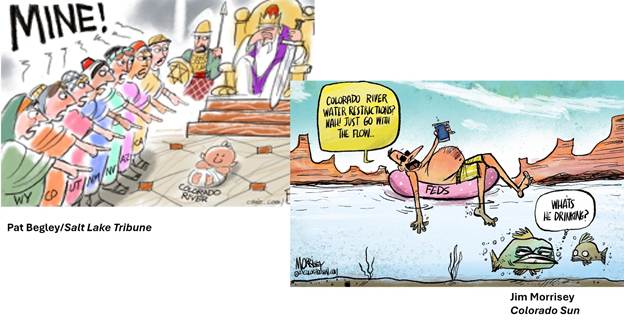
Citizens are starting to encounter a growing number of adverse environmental impacts. A small taste of what’s ahead can be seen in Denver, where neighborhood fights are breaking out between those who are following rules for watering their lawns and those who are flouting them. And this is the easy stuff. What happens when people figure out how much water golf courses are using. Who will decide which is more important to the country, agriculture or golf?
At the other end of the spectrum is the flooding. For instance, the overflow storm reservoirs for Chicago—built not that many years ago with the promise they could accommodate the most extreme situations—have flirted with capacity limits several times this year. While the overall level of rain has not increased that much, the way rain falls has changed. Flooding, in most cases, turns out to be less a function of how much rain falls and more a function of how fast it falls. The torrential nature of the rain in Texas led to 130 deaths from flash flooding on the Fourth of July
The change in rain fall patterns is related to planet warming. The physics of this have been known for two centuries: higher temperatures make climates less stable because even small changes in temperature can exponentially increase the concentration of rainfall. Adapting to this reality will require new (and in some cases very expensive) approaches to managing hitherto unimaginable bouts of heavy rain.
Heat: Fire and Grid
It is well beyond dispute that the world continues to warm. And, to the surprise of no climate scientist, this has led to increased wildfires. Everywhere. There is enormous loss of property and threats to both immediate mortality and longer run increases due to failing air quality.
There are some short-term fixes—better warning systems and better regulation of where and how people can build. (If the latter can be politically feasible; if not, we will certainly be put in a position where taxpayers will have to bail out people who ignored recommendations.)
What really needs to be done is back off temperature. While this is part prevention, there is an immediate problem. If we can stabilize or reduce temperature, it will reduce the current threats from higher temperatures. It seems we have missed the window to hold global temperature rise to 1.5 degrees above pre-industrial levels, but we might be able to keep it from rising all the way to 2.0. We might even be able to push back some of the extreme effects we are seeing now.
This will require a number of different actions but one thing that clearly improves the possibilities is reducing reliance on fossil fuels. The most obvious big step is to increase the electrification of the economy, particularly from cleaner energy sources such as wind and solar. We need to continue battery development and deployment and improve the grid to carry electricity from where it can be safely produced to where it is needed. We need also to support the conversion of American transportation, which is responsible for about 28% of all the country’s emissions, to electric vehicles.
Microbes
A recent New Yorker article illustrates how current global warming has caused changes in the world’s microbe communities for which we are not prepared. Vibrio vulnificus, popularly known as flesh-eating bacteria, has flourished in the warmer ocean. It has been responsible for five deaths so far this summer in Louisiana.
What is called for is closer monitoring, more research into specifics (including antidotes to rare infections) and a strong system of increased surveillance and warning. Communication among specialists working in this area is essential.
Climate Migration
This is a qualitatively different problem than the previous as it is more an issue of moral adaption rather than material adaptation. Climate changes are forcing a substantial amount of migration, most within countries, but also enough across countries to upset politics within developed countries, including ours.
It is hard to know what obligation developed countries face. On the one hand, advanced countries have contributed disproportionately to climate problems. On the other hand, as a political matter, if not a practical matter, no country is going to provide open-ended resources to climate migrants, who, in any event, are hard to distinguish from people who want to migrate for a whole host of reasons.
It will be hard to make this problem go away simply by making it harder to immigrate (legally or otherwise) to developed countries. People will continue to find ways in, particularly in large countries like the U.S. It may also be hard to morally justify the horrible conditions created as climate-related issues wipe out means of livelihood and, indeed, make areas uninhabitable. So, while this doesn’t pose the same physical dangers as the above threats, ignoring it carries its own perils. One, for sure, is a loss of international respect that the U.S. once had. It will also lead to more local violence, which inevitably will increase our defense budget. There is also the corrosive impact on our society of actively ignoring the well-being of people who are suffering through no fault of their own.
Overview
Even a casual reader will notice that the current administration’s attitude toward these necessary adaptations ranges from indifference to, more often, hostility.
The Trump administration has actively hindered alternative energy sources and openly encouraged fossil fuels. They have dissolved the National Advisory Committee on Microbiological Criteria for Foods, which was set up under President Reagan in 1988 to provide scientific advice and coordinate best practices for defending against dangerous microbes at all levels of government. They have gleefully dismantled foreign aid efforts.
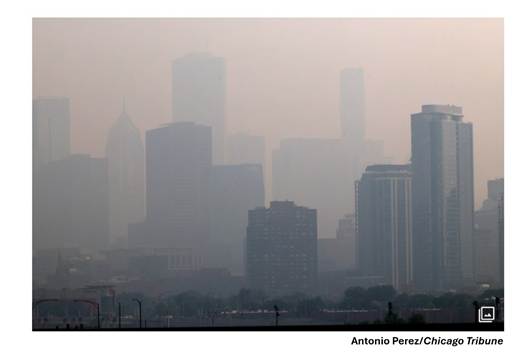
There is not sufficient appreciation for how awful this is. It gets swept into the big “What did you expect from this horrible administration.” But failing to adapt, often even opposing, potential adaptations to threats across a broad range of issues is specifically harmful to the country. Ask the people in Spokane whose houses burned down, the people of Chicago with asthma, the victims of flesh-eating bacteria where it never occurred before, the town in Arizona going out of existence for lack of water, and so forth. These are not future problems. These are real problems today.
I think the explanation that Trump and supporters are simply giving into the grift from big corporations is not sufficient. That is surely a factor, but not complete. After all, how much grift is necessary?
Of course, having gotten this far into “climate change is a hoax” it is hard to back down without having to admit the entire framework is bogus. Which would obviously be detrimental to the brand. So that keeps a large portion of Republicans officeholders who presumably know better pretending that everything is okay.

But there is something else at work, which I think is an unfortunate combination of Trump’s personality and some larger disfunctions in our society.
Trump personality has been amply dissected in the media. The degree of narcissism simply doesn’t allow him to accept that there are others whose expertise overrules his gut instincts. And he has been able to turn what is in fact a dangerous impulse into the basis for amassing power…and ego satisfaction.
What’s more interesting to me is why so many people, many of whom are most directly in harm’s way, seem to be anxious to hang onto the self-destructive impulses to avoid adaptation measures. My guess is that there enough people who feel their life is out of control and, taking cues from Trump and others, blame that on science, which they see as part of the “liberal elite”. I can’t possibly know what is really going on with these people; my life is too removed. But I can imagine the attitude that scientists, who are after all part of the educated class that has not only been doing much better than they have, but keeps advocating for things that either seem irrelevant or require changes that they don’t really want to make or that in some cases are specifically against their interests. So when Trump (and ilk) offer an alternative view of the world, they are happy to jump on it.
This group is large enough that it becomes key to a larger Republican agenda that is otherwise unsalable. Thus, we get a situation where government is steadfastly refusing measures necessary to adapt to existing climate conditions. To be sure, I am not implying that what needs to be done is easy or even always clear. But it is abjectly wrong to try to pretend the clear and present dangers of environmental change do not demand response.
No amount of threat and bluster were able to make the sun revolve around the earth. Apparently, the current Republicans are willing to be remembered as equally fatuous—and more dangerous to their own citizens.
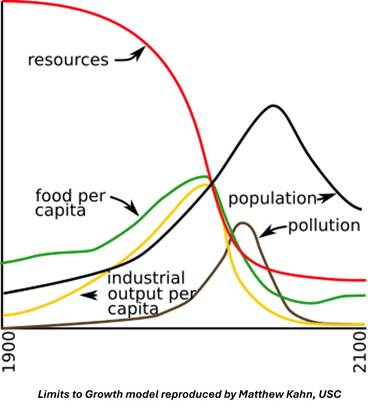

 Between Hell and High Water