By Mike Koetting November 17, 2023
The first car I ever owned—actually, it was a joint ownership, but that’s a different story—was a 17-year-old, 1951 Plymouth. It was a beater. Edges crumpled, seats beyond uncomfortable, floorboard rusting out, no radio, heater didn’t work and it had a sometimes starter.
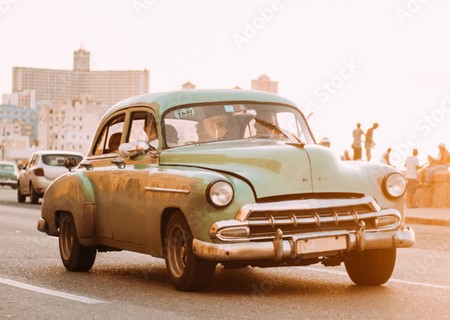
We drove this car because that’s the only car we had. There was no public transportation where we lived. Without a car, we were, literally, stuck.
Americans don’t seem to realize that their government is that car. When first put together, it was a magnificent machine—the envy of many countries. And would-be countries. But over the centuries, other countries began to see problems, tinkered with the American original and made one change and the other. The United States did some important tinkering, but it retained a lot of the original, particularly aspects of the structure that make our government so change-resistant. At the same time the creativity unloosened by democracy accelerated the rate of change. Predictably, over the years, our government became less fit for the highway.
Changes–Necessary but Impossible
I got thinking about how beat up and fragile our government was when I encountered Steven Levitsky and Daniel Ziblatt’s new book, Tyranny of the Minority. It carefully details how the safeguards against majoritarian overreach that are incorporated into our government have been employed by a minority to frustrate the majority.
True, these safeguards were intended to avoid majoritarian overreach. But they were seen in the context of a fundamental commitment to majority rule. Overusing these safeguards not only makes mockery of majority will, but also destroys the machinery—like if you routinely use the parking brake to stop the car.
In the last chapter, Levitsky and Ziblatt summarize a list of steps that would restore a better balance of representing majority will while still protecting rights of the minority. I liked the list, but what really struck me was how profoundly irrelevant it was. Even if 55% of the country supports these measures–which in a public opinion sense is a reasonable, if rough, approximation—there is little chance of any of these being enacted in my lifetime.
It is like our old car. It was clearly at major risk of breaking down, but we just kept on driving it. In our case, we didn’t have any economic choice. Americans have choices about their government; they just don’t want to exercise them.
Democracy, as Adam Gopnik emphasizes in a terrific New Yorker piece, is not actually protected by the words of the Constitution—or any other laws. It is protected by a widespread consensus among the governed that they will live by what the majority wants as long as basic rights are safeguarded. This is not possible without compromise. In today’s America, cultural developments have raised the barriers to compromise. When combined with the historical structures meant to make change difficult, compromise is culturally taboo and politically dangerous.
I don’t see how this can end well. Eventually our old car gave up and was towed to the salvage yard. I can see the same happening to America. Maybe that’s too pessimistic. Hopefully the kids will think of something before we destroy the car. I guess we’ll see. But we underestimate the danger at great peril.
Why Does It Persist?
Given the problems of our current governing structure, why is it so hard to change. Seems unlikely that it doesn’t occur to the majority of people that facing a government shutdown every couple months or being unable to promote officers in the military are indicators that the government has hit the junker status.
Procedurally, the answer is clear. Our government is in such straits because it is structured to resist change.
But that’s kind of a tautological answer. The fuller answer is in three deeply pervasive issues embedded in our society that lead us to accept the clunker government. These issues are related and are no surprise.
One is fear of “the other.” Whether it manifests as racism or xenophobia or gay-bashing, there is a material portion of the population willing to go along with whatever seems to best insulate them from having to deal with “the other”. I am not suggesting the KKK runs riot in our country. I believe the vast majority of people have a very substantial streak of innate goodness and a strong live-and-let-live attitude. I am extremely wary of using this impulse as an all-purpose explanation for whatever we disagree with. But neither do I believe these attitudes are all-or-nothing attitudes—there are infinite shades of concern about “the other” and at least some of it is baked into all of us, so it has a way of creeping back to shape events well beyond what people openly acknowledge.
People’s willingness to reconsider the fundamental operating system of the country is colored by the lingering fear that measures that are “more democratic” are going to give more rights to “the other.” Keeping the status quo is safer. This is especially true when politicians play on people’s fears rather than working to bridge divides.
The second is the vested interests in this country who exploit the mechanisms of minority protection to maintain their wealth.
Economic growth is generally good for democracy. Countries seem more open when their economy is thriving. And capitalism is good for economic growth. But the relationships are not automatic. Unfettered capitalism tends to run amok. Which is what has happened in the United States, particularly since the Reagan presidency.
Whether it is stacking the Supreme Court with judges whose fundamental loyalty is to corporations or using the filibuster to prevent income tax reforms that enjoy huge popular support, the relative inability to use the instruments of government to level the playing field for Americans benefits the rich. It is not coincidental that virtually all other advanced democracies have more flexible governments and broader safety nets with greater equality in income.
The third problem is that as long as the economy provides comfortable living for the upper tiers of the economy, people who might make the most difference don’t seem to recognize that the condition of our government is a reflection of a broader threat to the entire society.
The point I want to make here is as much about the perception of America’s current situation as it is about the problems themselves. For those with economic means, the capitalist engine continues to pump on. Big money is still being made, and the overall economy continues to perform well for people at the top, which blinds, say, the top 15% of the economy, to how close the entire enterprise is to falling apart. The car is still running—maybe a little gimpy—but life isn’t so bad.

To be sure, the Republican party has been more specifically aggressive about maintaining the current governmental structure. The Electoral College, the filibuster, the Supreme Court all make it harder to change structures and Republicans have focused on using them to their benefit. Some of that has to do with specific historical circumstances—progressives have benefited more at other times—but since Reagan Republicans have exploited these issues to the max since Southern and rural populations, where Republicans enjoy sizeable majorities, are great beneficiaries of these structures.
This political dynamic is hopelessly tangled with the cultural and economic divides that trump our usual ways of thinking about political issues. I fear the economically well off—all the economically well off, not just the top 1%–have trouble appreciating that the car is really on the brink of collapse. For them, the stock market is reasonably healthy, we keep getting good economic reports, there is relative confidence in old age support, and vacations and health care are fine. We can still afford to go to a fancy restaurant now and then.
But it looks very different for those who have lost the economic lottery, which is now a majority of the country. Most families have two wage-earners and are still struggling to keep up. Income continues to get more uneven and upward mobility is less likely than at any time in American history. Many of the hard-won gains of union power have slipped away: pensions are largely a thing of the past and vacations and sick leave uncertain. Home ownership is out of the question for an increasing percentage of the population. Almost two-thirds of Americans do not have enough money on hand to cover a $500 dollar car repair. For these Americans, the healthy stock market that keeps my benefits coming is no benefit. In fact, it is infuriating because they see it as the rich getting richer. Who cares if it all gets blown up?

In this context, a huge swath of the country simply dismisses talk about things like Constitutional reform as irrelevant. In part because it seems too abstract and in part because they have come (with help from Republicans) to associate these reforms with the condescension–real and imagined–of those in the urban/professional class. The resulting rage blots out everything else. All of this is unfortunate, because without an overhaul of how our government works, the road to a more equitable America is blocked. Which serves the wealthy just fine. However, I worry this is not sustainable. The clunkiness of our government is catching up with us and at some point, probably not too far in the future, the car will give out.
Realism also compels me to add another point about why it is hard to imagine any material change in the governing apparatus. The current environment is so poisonous that one can too easily imagine an awful outcome from rolling the dice on major structural changes. Sure, I can imagine the changes I would like to make in our Constitution, but Ron DeSantis can too. I am, of course, a reasonable person. I’m not so sure about DeSantis….
And so on.

 Between Hell and High Water
All too on target. Well done.
Ira Kawaller
(718) 938-7812
Check out my blog here: https://irakawaller.substack.com/ irakawaller.substack.com/
LikeLike