By Mike Koetting August 19, 2024
Chicago has had more presidential nominating conventions than any other American city (26). The last one, the 1996 Democratic Convention, was pretty much of a snooze—do you even remember what happened then? The one before that, however, in 1968, was an epic barn burner. I was there and got my head wacked.
If you want to read about that, check out my book on the Sixties, You Must Choose Now.

Even though this one is anticipated to be much quieter, I figure I have had enough convention for a lifetime, so I’m watching from a distance. There will be some contention over a few specific issues, particularly outside the convention hall. But inside, Democrats seem determined to present a show of exuberant unity as tight as shown at the Republican convention.
The anticipated show of enthusiasm is something of a surprise. A month ago, the Democrats were facing their convention with the grim determination of a baseball team going into the ninth and down by a whole bunch of runs. No one was admitting defeat, but energy was hard to find. When Biden stepped away, a stunning whoosh swept the Democratic party. People were energized, wallets opened, rallies hopped, and the internet was flooded with new memes. Donald Trump and his opportunistic running mate suddenly looked even weirder.
This is great. Joe Biden was a terrific president and I think he would have been a good president again. But he was no longer a compelling candidate. There can be a lot of philosophy spilled trying to get to the bottom of people’s confusion between what they want and what they think they want, but it was clear that another term of Joe Biden was going to be a difficult sale, even given that the opposition was an incoherent, amoral, declining grifter. Kamala Harris put new life into the campaign.
Whether that’s enough remains to be seen. The arithmetic of the Electoral College means presidential contests still revolve around a few key states. Winning the popular vote is no guarantee of election. But victory feels within grasp. Indeed, a really large victory for Harris does not feel impossible.
Still, it is more likely that this election will be very close. There is something fundamentally wrong here. Donald Trump is not a likeable human. He served one-term as president where his main accomplishments were an enormous tax cut for the rich and stoking all the divisions in America. Yet millions of Americans seem happy to vote for him. And, while a Kamala Harris victory is an essential step toward addressing what’s wrong, by itself is unlikely to fix what creates the situation where Trump gets so many votes.
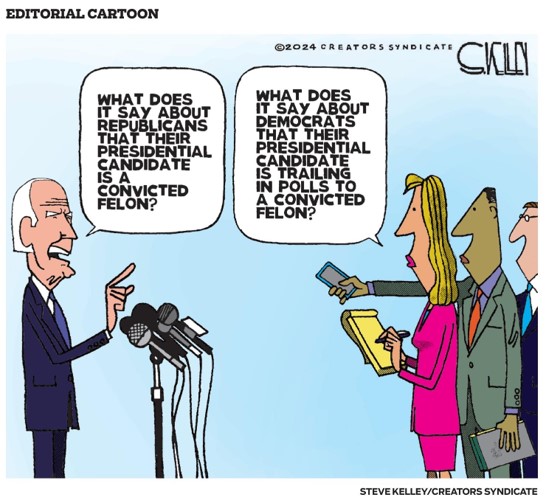
Under the best of circumstances, elections are conducted with high emotion, low information messages. Rhetoric is about sharpening arguments and glossing over inconsistencies in one’s own position. Differences get reduced to slogans with emotional impacts that are only loosely, if at all, related to the actual policies that will eventually be made. Trump’s unprecedented lying, name-calling and trash talk further pollute the airwaves. And Trump’s relative success is inseparable from a potent brew of racial, cultural, and economic issues—both cause and symptom of his candidacy. All this makes it very hard to understand what useful messages might be being sent and very easy to dismiss whatever the other side seems to be getting at. But democracy demands we try.
Focusing on the Economy
The Republican economic attack mantra is that Biden (now Biden-Harris) have made life worse. The Democratic response is to focus on the number of jobs added, the declining inflation, and the general strength of the economy.
This is a frustrating discussion. It is pretty much beyond dispute that the economic life of many Americans is very difficult. When we compare what people say they need to lead a comfortable life and the actual distribution of income, almost 80% of the population earns less than that. More than 60% earn less than two-thirds that amount. No wonder 78% of respondents say they are living paycheck-to-paycheck. Critically, we are not talking just about people at the very bottom of the income distribution. We are talking about people who are working, often working hard, and just aren’t making enough money to feel secure. Talking about jobs added or stock market levels simply doesn’t address the way most people feel.
Democrats have much better ideas for addressing the current situation. Most specific Republican ideas will make the problems worse, and to the extent Trump has actual proposals, they are absurd in terms of making life better for the average American. So why do we face a situation where nearly half the country thinks he is more likely to be better on economic issues?
It’s not that I think Democrats have a perfect set of solutions. But the idea that Trump and Project 2025 would actually improve the life of most people more than the Democrats is straight-out laughable. It requires explanation as to why they have any oxygen.
Many of the explanations are “anti-signal”—that is, the Trumplican approach is designed to disguise actual motivations. Most salient, Republicans have created an “ultra-liberal” bogeyman. By constantly calling first Biden, now Harris-Walz, “ultra liberal” (and “communist” and “radical leftist” and all sorts of other stuff), they have created an aura around the Harris-Walz candidacy that is unrelated to actual policies. For instance, the things Walz considers his accomplishments in Minnesota–free school lunches, access to abortion, better gun laws, tax-credits for low and middle income taxpayers, child tax credits for low income families, and free college tuition for low income students who qualify—are taken for granted in other developed counties and, by and large, they enjoy the support of the vast majority of Americans. To constantly refer to these as ‘ultra-liberal” is a reprehensible degradation of the discourse. Unfortunately, it also seems to be effective.
This reflects the consequence of the relentless campaign to associate promotion of these ideas with less well-defined sentiments about loss of autonomy and identity. There are a lot of Trump supporters for whom the “ultra-liberal” label overrides the fact that they would agree with the actual policies if those policies arrived in different wrapping paper. And while it is true Democrats have supported protections for LGQT people and more compassion for undocumented immigrants, things that are more controversial, they hardly comprise an “ultra-liberal” agenda
Still, if the real message is that there is a perception of loss of autonomy and identify to reduce polarization, we need to figure out how to separate this issue from the silliness. This is particularly important as the Democratic party has become the bastion of the college educated which makes miscommunication even easier. Although Democrats actually try harder to address working class issues, they struggle to find a language and expression that doesn’t sound condescending.
There is also a jujitsu quality to the Republican messaging because it makes Democrats worry about being branded “ultra liberal” and hesitant to follow the logical conclusion of their positions. Some of this is political positioning and some happens because it’s the only way to get the proverbial half-a-loaf. Either way, it induces confusion as to what they really stand for.
It is also the case there are differences among the Democrats. There is a very well-funded wing of the Democratic Party that is left on cultural issues but represents big money on economic issues. Several major contributors to Harris have already laced their donations with suggestions she moderate some of Biden’s regulatory initiatives. These people were also linked with the initiatives of Clinton and others to open trade. Republicans have been very successful at blaming the demise of American manufacturing on the Democratic Party because of those people. While Democrats certainly share responsibility, Republican votes have a bigger role in offshoring, have blocked measures to ameliorate the problems from the loss of manufacturing, and have obstructed Biden’s attempt to support it. But none of this negates the fact that the development of certain aspects of the economy has left deep problems throughout the society. Addressing this is going to require more fundamental changes than either party is currently willing to contemplate seriously; the focus on trying to blame the other side makes it easier to avoid the more fundamental discussions.
Another circumstance working against the Democrats is that it is hard to implement programs at a transformative scale. This is less a problem for Republicans because so many of their “policies” are not policies at all but are simply being against whatever the Democrats are proposing. These tactics are the largest obstacle to constructive politics. But there are other, more endemic, challenges:
For one, it is inherently difficult to get things done in democratic government. As much as Biden did accomplish, most people don’t feel it. In part this is because government is a clumsy instrument. Government is always trying to meet multiple, sometimes conflicting goals. At best this makes government slow; at worse this introduces serious policy sclerosis. ((Ezra Klein and others have argued strenuously for tighter focus in government policy.) Another constraint is that many of problems government is trying to solve are really about how people behave. Unless people willingly go along, it is nigh onto impossible to force them without breaching other imperatives.

And, of course, rhetoric aside, these are very hard problems. Take Harris’ economic proposals. They hit on issues truly central to American concerns. But several are going to be very hard to implement and they are not likely to have immediate impact. For instance, America’s housing situation is a 24-kt mess. Some of her proposals are strong, others a bit problematic. But even the best solutions to this issue are going to require years to have a tangible impact. It is likely that to make a major breakthrough will require innovative approaches that aren’t on Congress’ agenda.
Our current political environment makes it impossible that the political establishment openly recognize we need to jointly figure out better solutions and work to implement them. The political parties, particularly Republicans, would rather use their blunt proposals as cudgels against the other party. While most people don’t articulate the problem this way, I believe this useless head-butting is why so many people have so little faith in government. Which is clearly one of the underlying messages.
In Short
Although Harris has provided Democrats with exciting new hope, we also need to make sure we hear the stuff folks voting for Trump are trying to say where it’s useful. We must overcome real obstacles to create a conversation all can participate in—beyond shouting. Even more importantly, to get stuff done.

 Between Hell and High Water
Welcome back. Good one. Didn’t expect to hear from you until September.
Ira Kawaller
(718) 938-7812
Check out my blog here: https://irakawaller.substack.com/ irakawaller.substack.com/
LikeLike