By Mike Koetting March 26, 2024
My attention was piqued last week when I noticed two articles suggesting that the wheels were coming off the World Trade Organization (WTO), the 160-something nation member organization whose members have agreed to negotiate, implement and abide by common rules for international trade under the premise of free trade. I started to think about the implications of its collapse and whether that was good thing or a bad thing. Oh, and I suppose, whether or not it was close to death.
Let’s start with the last. My Peanut Gallery View of the facts suggest that the WTO is facing some major problems. The most recent of its biennial meetings ended with no major agreements despite some serious issues on the table. The dispute resolution mechanism has come to a standstill as the United State has blocked appointments to the resolution panel for seven years. The Global South, particularly South Africa and India, have used their ability to block many resolutions. Competition between the U.S. and China has spilled into a wide range of issues.
That being said, the WTO continues to receive support from major players like China, Japan, South Korea, and the European Union. The U.S., while decisively ambivalent about the WTO, does not appear to be in any hurry to pull the plug. For better or worse, obituaries are premature. World trade is too important to leave it totally adrift.

The Problem with the WTO
There are major structural problems with the WTO—particularly its dispute resolution process—but its fundamental problem is that the world is complicated and there is no practical way to develop an international organization that doesn’t get caught up in the paradox that in order to maintain “free trade,” you have to restrain some trade. And all sides think the restriction on them are unfair.
The underlying theory of the WTO is that if everyone has access to free trade, everyone will come out better. While this contains an important kernel of truth, as an underlying proposition it doesn’t bear any more scrutiny than any other simple-minded defense of capitalism. It is demonstrable that the (relatively) free trade era has on average improved economic positions around the world. The problem is that, contrary to hope, a rising tide doesn’t raise all boats. And certainly not equally. The free trade era has created dislocations in many counties—most dramatically the US because it doesn’t have the guardrails of other developed countries—and it has increased inequality in most countries. Moreover, as the reality of climate change becomes more inescapable, it becomes harder to use economic growth as a context-free yard stick. Even a 25% increase in a low income may not be worth it if it requires a major deterioration in air quality.
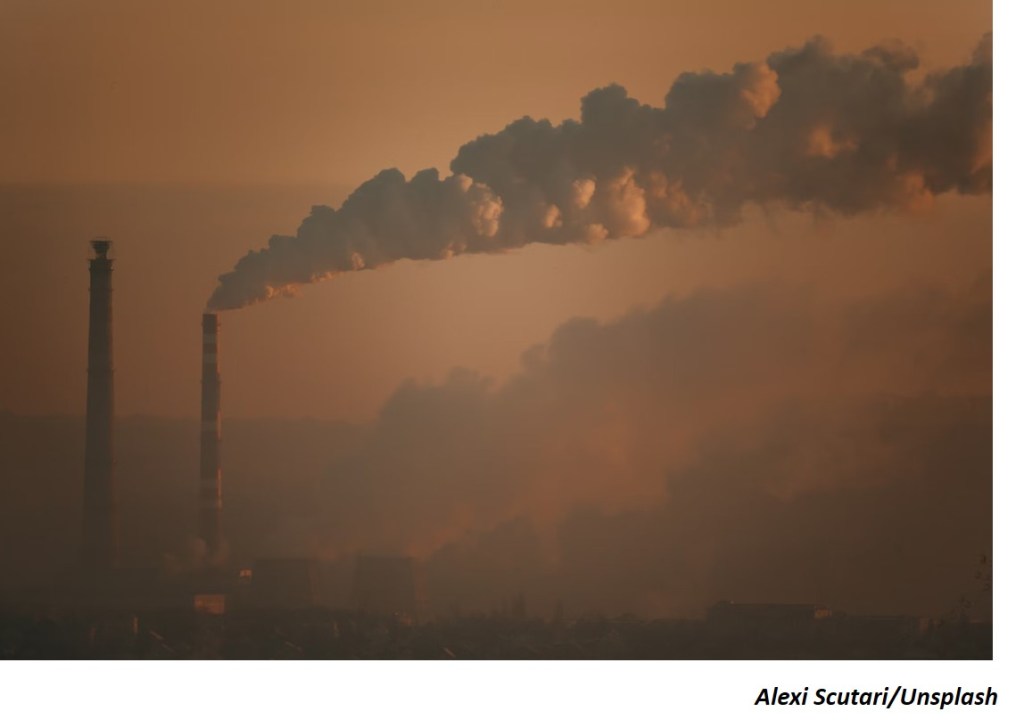
The trick is to balance the benefits that can follow from free trade with the adverse consequences that can also follow. This is not something the WTO was built to do. It is largely a one-trick pony with bigger payoffs to corporate interests. Unfortunately, it doesn’t follow that blowing up the WTO is an easy road to where we want to go. Freer trade can have some real benefits, more restricted trade some downsides, and in any event, someone needs to set rules of the road.
Two areas illustrate the dilemma: responses to overfishing and to steel and aluminum tariffs.
Overfishing
Although it is not frontpage news, there is pretty broad consensus that the world is overfishing its resources. Since 2001, the WTO has been seeking to restrict subsidies to the fishing industry offered by various governments. The idea is that a material slice of the overfishing would be abandoned if ending subsidies made the fishing less desirable. Today’s world-wide fishing fleet has been estimated to have up to two and a half times the capacity to catch what we actually need. Governments are paying $22 billion a year in subsidies that drive overfishing. These are the subsidies primarily for industrial fishing fleets that artificially lower fuel and vessel construction costs while enabling them to fish farther out to sea and for longer periods of time.
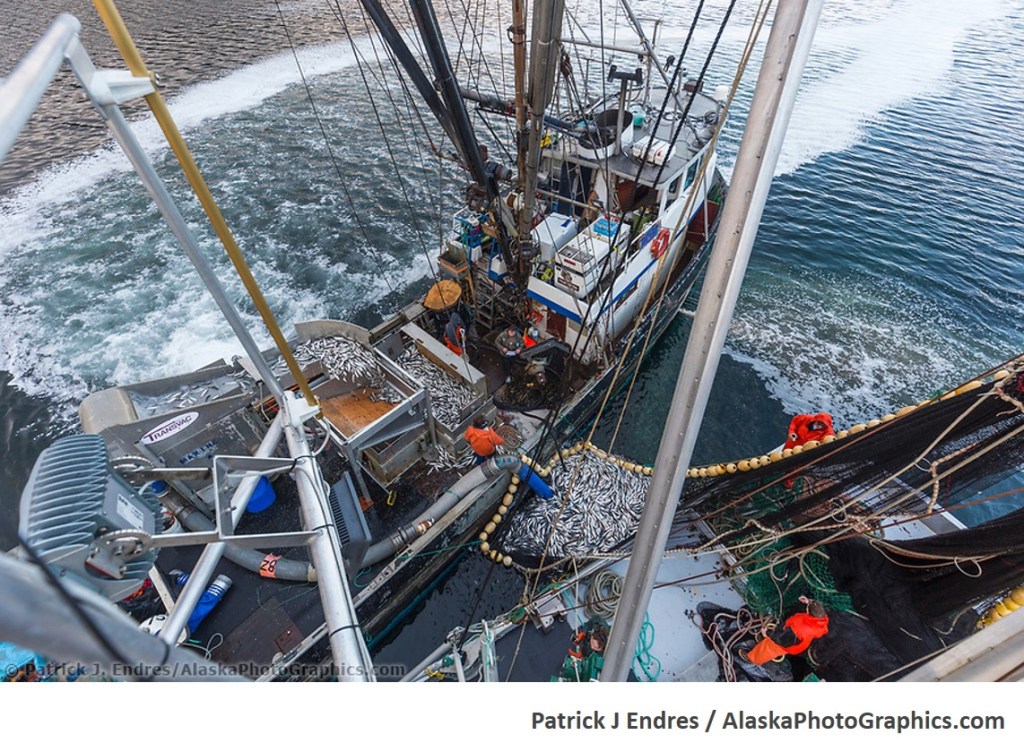
After 20 years, at its 2022 conference, WTO finally hammered out a broad prohibition on subsidizing corporate fishing subsidies. However, for that agreement to take effect, it must be ratified by 110 of the 163 WTO members. So far, only 71 have ratified; the 92 who have not include eight of the top 20 fishing nations, mostly in southeast Asian. The discussion at the recent conference was around enforcement provisions for the earlier agreement, but those discussions stalemated, largely because some less developed countries believed the language granted too many exemptions to more developed countries, particularly China, the E.U., Japan, South Korea, and Taiwan. (The U.S., apparently, was pretty much a passive observer for most issues at the meeting.)
Clearly the world needs agreement on how to deal with overfishing. Failure to do so will have catastrophic effects. Whether the WTO is the right forum for this issue is a fair question. After all, strict adherence to free trade could be a literal race to the bottom. But it will be an epic disaster if left to individual nations to pursue their own interests; some forum for common agreement is a necessity. Whatever that forum is, nations will be saddled with negotiating agreements both internationally and at home among directly impacted individuals, corporate interests and their political environment. There will be some losers. For a primer on how difficult these issues become, consider the outsized role of fishing on Brexit.
Steel and Aluminum Tariffs
In comparison to the story of fishing limits, the tariffs on steel and aluminum are fairly well known. Creating these tariffs was one of Donald Trump’s signature moves. It was very effective at creating the illusion of Trump as warrior for the American working class. The actual consequences are, however, murky, with a lean toward the idea that overall they have had more adverse than positive economic impacts.
Regardless, Biden has not shown any interest in reconsidering these tariffs. He seems perfectly content to ignore appeals to the WTO that these are blatant violations of free trade rules. (Yet another reason he would be in no hurry to address the broken WTO dispute resolution system.)
Biden’s overall plan, as spelled out by Jake Sullivan about a year ago, imagines a four-pronged strategy for international economic policy.
- Rebuild America’s manufacturing sector
- Respond to countries that use economic integration for competition that is neither open nor cooperative
- Create a just, efficient and timely energy transition
- Address inequality and its threat to democracy
To me, this sounds pretty much like a domestic strategy, but Sullivan went on to say this program includes “working with our partners to ensure they are building capacity, resilience, and inclusiveness, too.” It appears this will be achieved by negotiations not necessarily outside the WTO, but not necessarily limited by it. As an operating principle, this is more similar to a Trump formulation than, say, an Obama formulation—although it is much more coherent and broadly focused than anything that ever crossed Trump’s mind. As a set of operating principles, it does make short run sense. But it leaves the question of how we relate to economies that are not our partners. Say, in particular, China.
America’s trade position vis a vis China is obviously complicated. As seriously peeved as we have been about some of their tactics—like flooding the world market with heavily state subsidized steel—we continue to depend on our trade with them. We have become less dependent over the last few years, but it would still come as quite a shock to American consumers if they no longer had access to lower cost Chinese products. Walmart without free trade is a different store. Which is part of the essential dilemma: trade from lower cost countries is good for Americans as consumers, but bad for those whose jobs disappear. Unfortunately, a great many American voters want it both ways.
Consistent with its general strategy, it appears the Biden administration is negotiating waiving these tariffs with, so far, Canada, Mexico and the E.U. How that will play out has yet to be determined, particularly as Biden is trying to tie tariff reductions to environmental standards.
This is an example of the more general problem of tariffs being proposed on products that do not meet environmental standards, the so-called carbon border adjustments. The EU has proposed some of these, as has the U.S. The idea is straightforward: to the extent environmentally sound policies entail higher costs, foreign producers should not be allowed to compete with less expensive but environmentally worse products. The tax credits for clean energy equipment and vehicles built into the Inflation Reduction Act perform a similar function—and have elicited similar concerns from non-complying countries.
Conclusion
All this suggests the traditional approach to free trade, as theoretically embodied in the WTO, is not sufficient to address world problems. But what will be? The better idea of free trade—healthy competition over market share has broad benefits—is worth protecting. And we need a mechanism by which the world can address common rules for trade, including nations who are at the moment not on good terms. I don’t know if the WTO can be reformed to serve this purpose, but I seriously doubt it can be achieved solely through fragmentary agreements among subgroups of nations. The climate crisis requires an economic transition at a speed, scale and complexity beyond anything previously attempted by humans. And, of necessity, mankind cannot address the climate process without substantial increases in equality. We all need to be pulling in the same direction and not focusing too narrowly on our immediate interests.

 Between Hell and High Water